
The operating system for decarbonising university estates
The challenge isn't setting a net zero target — it's knowing where to invest first.
20% and up before major capital investment. 20% and up is a typical starting point for portfolio savings, not a guarantee and not a measured single-building result.
Three pressures
Financial pressure
Rising and volatile energy costs, constrained capital, and the need to justify every investment.
Complex estates
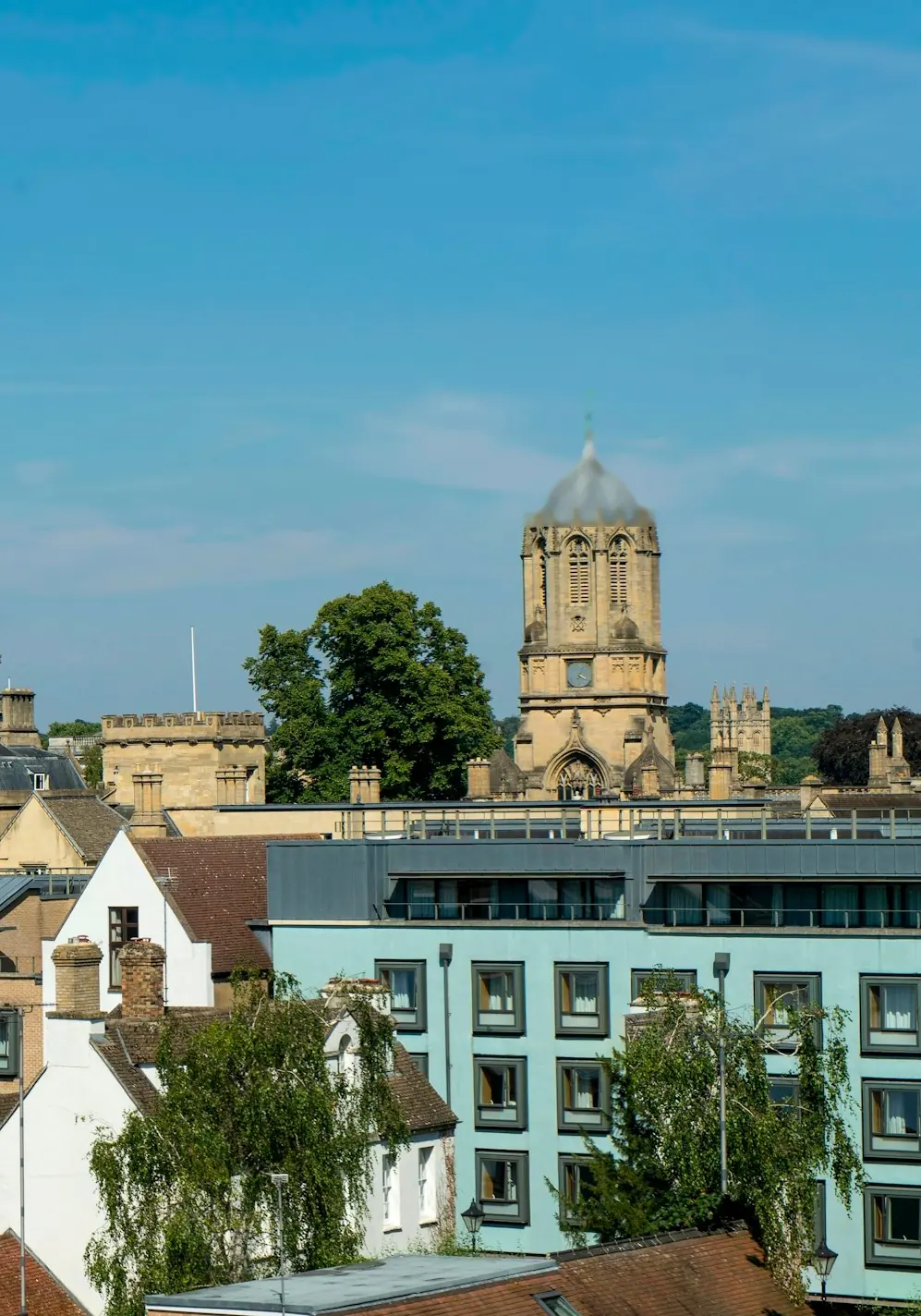
Mixed historic and purpose-built stock — Victorian conversions plus purpose-built facilities — with uneven performance.
Climate commitments
The target is set. Students, funders, and governing bodies want measurable progress.
One product, campus language
- 01
Digitalise
Create an accurate digital representation of the estate — a calibrated twin for each building.
- 02
Highlight assets at risk
See where carbon, cost, and risk sit across the portfolio.
- 03
Path to decarbonisation
A trusted baseline and a sequenced path, not a stack of disconnected reports.
- 04
Control the estate
Find operational waste before you replace plant. Immediate savings buy time.
- 05
Prioritise investment
Compare interventions on carbon, cost, operations, and risk. Align with funding.
- 06
Make impact
Deliver measurable change and keep the evidence current.
Historic and purpose-built fabric
Historic fabric is in scope. Kellogg College is 15 mixed buildings: Victorian conversions plus purpose-built facilities.
Funding evidence
Orynia produces finance-ready evidence that supports Salix Finance applications and internal investment cases.
Kellogg College
Named campus case: Kellogg College. 25% immediate energy and carbon. 47,500 GBP / year. Electrification and net-zero pathways are modelled comparisons only.
Kellogg on the proof pageOrynia has given Kellogg College the clarity and confidence to turn our decarbonisation ambitions into a practical, evidence-based plan. By bringing our estate data together, creating a digital twin of our buildings and modelling both the carbon-saving opportunities and their operational and capital costs, we can now target and verify our decisions far more effectively. The question really is: why wouldn't you do it? The immediate energy savings are already creating value, while giving the College the time and insight to plan and implement the right long-term interventions in the right places.